
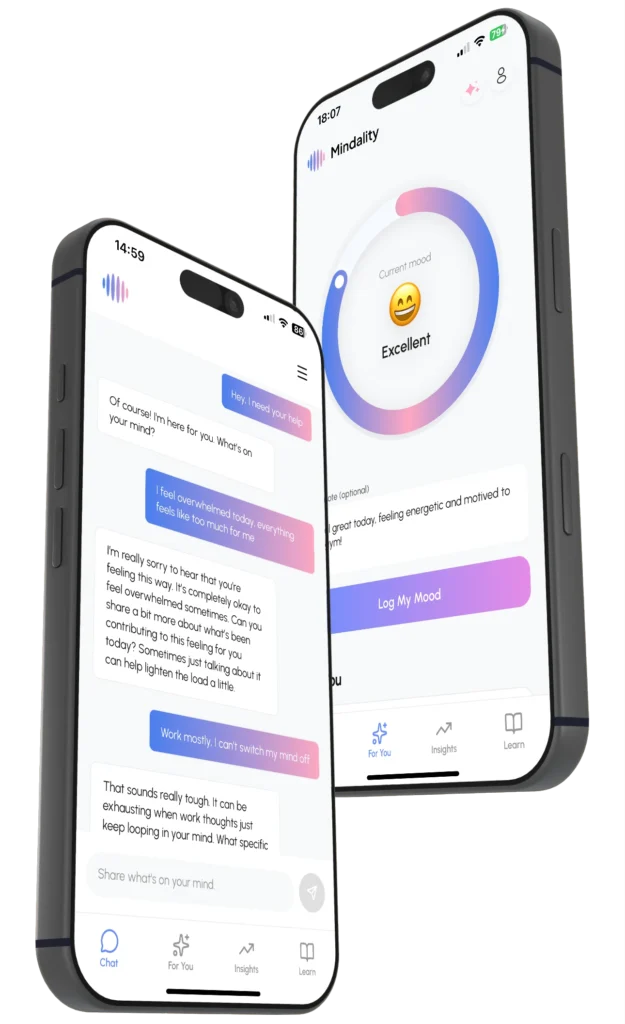

Mindality was founded on a simple observation: in our fast-paced, always-connected world, we rarely create intentional space to understand our own emotions. We saw the gap between occasional therapy sessions and daily emotional experiences and built a bridge. Not as a replacement for professional care, but as a companion for the emotional moments in between.
Every morning check in, every reflection prompt, every insight offered by our AI all serve this single purpose: creating the conditions for you to understand yourself better.
We noticed something important was missing. Between therapy appointments, during stressful weeks, in those quiet moments when you’re wondering “why do I keep feeling this way?” there was no consistent, gentle space for emotional exploration.
Mindality exists for that space between. Not as a replacement for professional care, but as a companion for the everyday emotional moments that shape who we are. We built what we wished existed during our own moments of transition, stress, and self-discovery.
How We Build Mindality

We draw from psychological research about emotional awareness, journaling benefits, and habit formation. We consult with mental wellness professionals to ensure our approach is responsible but we never provide clinical advice.

Our AI doesn't pretend to be human. It's designed to ask thoughtful questions, notice patterns in your reflections, and create space for your own insights. Think of it as a conversation starter, not a conversation replacement.

We build in small steps, test with real users, and evolve based on what actually helps people build emotional awareness. If a feature doesn't serve genuine emotional growth, we don't build it.
Mindality exists for that space between. Not as a replacement for professional care, but as a companion for the everyday emotional moments that shape who we are. We built what we wished existed during our own moments of transition, stress, and self-discovery.
How We Ensure Mindality Stays True
We focus on the 80% of emotional experiences that benefit from daily awareness, and clearly signpost the 20% that need professional care.
We use AI to facilitate human insight, not replace it. If a feature makes users feel less connected to themselves, we don't ship it.
We regularly remove features that complicate rather than clarify. Emotional awareness tools should become simpler with time, not more complex.
We believe the best emotional tools are built with the people who use them. Share your experience, suggest improvements, or just tell us what emotional clarity means to you.
Humans Building Human-Centered Tools
After my third journaling app abandoned me, I realized: we need tools built for emotional sustainability, not just downloads.
My research focuses on how small daily practices create lasting wellbeing. Mindality puts that research into accessible action.
My role is ensuring Mindality remains a safe, ethical space—protecting vulnerability while encouraging growth.